Global Solid-State Battery Intelligence
July 20–26, 2026
Commercialization momentum is increasingly shifting toward aviation, manufacturing readiness, and industry standardization.
Executive Summary
Three developments shaped the global solid-state battery industry this week.
First, the low-altitude economy is rapidly emerging as the industry’s most promising early commercialization market. At the Shanghai International Low-Altitude Economy Expo, discussions shifted beyond battery-cell performance toward system integration, lightweight design, and airworthiness certification. The industry is entering a new phase where engineering validation matters more than laboratory breakthroughs. Compared with passenger EVs, aviation applications place a significantly higher premium on safety and energy density while being considerably less sensitive to battery cost, creating a favorable environment for early commercialization.
Second, industry expectations regarding commercialization timelines are becoming increasingly aligned. Announcements from SVOLT Energy, Toyota, and several materials suppliers all point toward a similar roadmap: 2026 will remain a year of pilot production and demonstration projects, while limited commercial deployment is expected to begin in 2027. Large-scale commercialization of all-solid-state batteries, however, remains several years away.
Third, competition is moving from laboratory performance to manufacturing excellence. This week’s developments focused on scalable materials production, manufacturing processes, standardization, and yield optimization rather than record-breaking performance metrics. The industry’s defining question is no longer who can build the highest-performing battery, but who can manufacture reliable products consistently, economically, and at scale.
Key Numbers This Week
| Indicator | Value |
|---|---|
| Aviation battery energy density | 335 Wh/kg |
| Fast-charge demonstration | 72-second cycle @ 55°C |
| Drone weight reduction | ≈18% |
| Flight endurance improvement | ≈30% |
| Planned sulfide electrolyte production | 100 t/year |
China Highlights
Shanghai Expo Signals Aviation as the First Commercial Battlefield
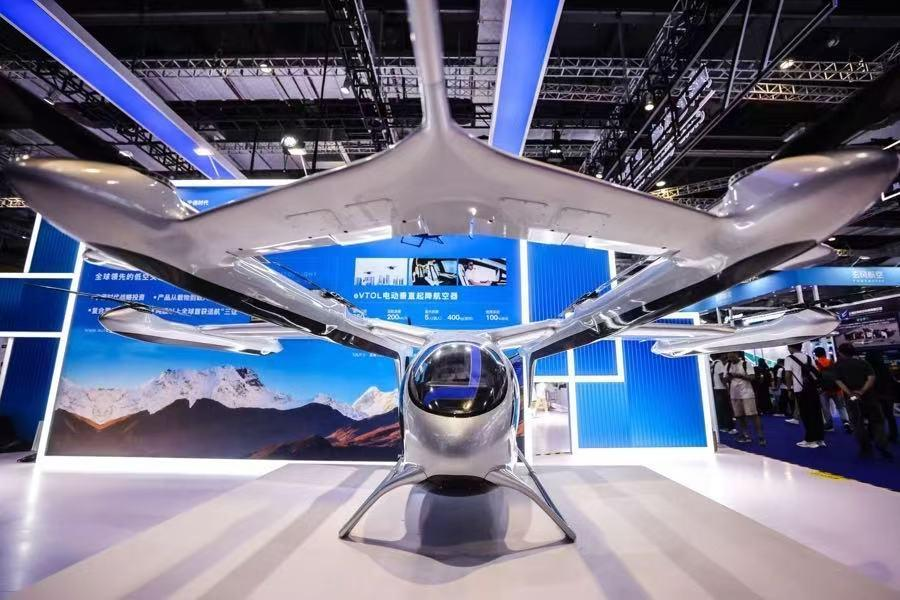
Held from 22–25 July, the Shanghai International Low-Altitude Economy Expo emerged as this week’s most closely watched event in China’s solid-state battery sector.
Unlike previous exhibitions focused primarily on electric vehicles, this year’s event highlighted batteries for industrial drones, logistics UAVs, and passenger eVTOL aircraft. Multiple companies showcased semi-solid-state and lithium-metal battery solutions, reinforcing the growing view that aviation could become the first large-scale commercial application for next-generation batteries.
Among the week’s notable announcements:
- Beijing Jianfan Technology unveiled an oxide-based semi-solid-state aviation battery pack with a system-level energy density of 335 Wh/kg.
- Farasis Energy announced continued airworthiness validation of its second-generation aviation battery while expanding cooperation with low-altitude mobility operators.
- CEBATTERY presented semi-solid-state batteries for industrial drones, demonstrating stable cycling under high-temperature and high-humidity conditions while reducing aircraft weight by approximately 18%.
A clear consensus also emerged among eVTOL manufacturers: semi-solid-state batteries are expected to dominate the next two to three years, with lithium-metal all-solid-state batteries likely to follow once manufacturing maturity improves.
Baytery Insight
Aviation is becoming the first realistic commercialization scenario—not because solid-state batteries are fully mature, but because aviation values performance over cost.
Unlike passenger EVs, where battery pricing remains a key purchasing factor, drones and eVTOL aircraft demand higher energy density, greater safety margins, and lightweight system integration. These priorities make aviation an ideal proving ground for premium battery technologies before broader automotive deployment.
Industry Standards Continue to Advance
China’s Ministry of Industry and Information Technology (MIIT) is expected to convene discussions on solid-state lithium battery standards later this month.
Topics include:
- Test methods for semi-solid-state and all-solid-state batteries
- Safety requirements
- Industry terminology
- Technical specifications
A unified standards framework will improve product testing, vehicle certification, and future aviation airworthiness approval while enabling more consistent performance comparisons across manufacturers.
Manufacturing Becomes the New Competitive Benchmark
Commercialization efforts continued across several battery manufacturers this week, although most projects remain at the pilot-production stage.
- SVOLT Energy confirmed third-quarter production of its hybrid solid-liquid battery using existing lithium-ion manufacturing lines to reduce production costs.
- DoctorS continued commissioning its GWh-scale all-solid-state battery facility in Tianjin, focusing on improving manufacturing yield at the electrode–electrolyte interface ahead of targeted pilot deliveries in 2027.
- Dongfeng Motor is advancing both oxide-based semi-solid-state and sulfide-based all-solid-state battery programs, with demonstration vehicles planned later this year.
Collectively, these announcements suggest that manufacturing readiness—not laboratory performance—is becoming the industry’s primary competitive benchmark.
Materials Suppliers Accelerate Capacity Expansion
The materials segment remained the most active part of the supply chain this week.
Researchers from the Qingdao Institute of Bioenergy and Bioprocess Technology, Chinese Academy of Sciences, demonstrated a sulfide all-solid-state battery capable of completing a charge–discharge cycle in 72 seconds at 55°C while maintaining encouraging cycle stability.
Meanwhile:
- Tinci Materials plans to commission a 100-ton-per-year sulfide electrolyte production line during the third quarter.
- Capchem Technology continues construction of its oxide solid electrolyte manufacturing project, with commercial production expected before year-end.
These developments indicate that upstream suppliers are already preparing for future large-scale commercialization.
Global Highlights
Japan | Toyota Maintains Long-Term Perspective
Toyota published a new patent focused on silicon–carbon composite anodes, optimizing binder systems to improve first-cycle Coulombic efficiency for future sulfide-based all-solid-state batteries.
However, company executives reiterated that conventional lithium-ion batteries will remain the dominant automotive technology throughout the coming decade, with all-solid-state batteries expected to coexist rather than rapidly replace existing chemistries.
United States | Aviation Remains a Strategic Focus
Factorial Energy reported continued progress in sulfide electrolyte interface optimization while advancing on-road validation with Stellantis.
The company also highlighted aviation applications, where previous flight tests demonstrated approximately 30% longer flight endurance, reinforcing the attractiveness of solid-state batteries for high-performance aerospace applications.
Europe | Fundamental Research Continues
Scientists at the Max Planck Institute for Solid State Research published new insights into lithium dendrite formation within ceramic solid electrolytes.
Although not expected to influence commercialization immediately, the findings provide an important scientific foundation for improving cycle life and safety in future oxide-based systems.
Capital & Industry Trends
Investment continued shifting upstream this week.
Capital increasingly flowed toward:
- Solid-state electrolytes
- Dry-electrode manufacturing
- Low-humidity production equipment
- Advanced manufacturing automation
Rather than focusing solely on battery-cell developers, investors are placing greater emphasis on scalable manufacturing capability and customer qualification.
The Shanghai Expo also increased market attention on aviation battery projects. However, investors generally agreed that future competitiveness will depend less on headline energy-density figures than on consistent manufacturing quality and successful customer validation.
Across the industry, one message is becoming increasingly clear:
Commissioning a production line does not mean achieving mass production.
Over the next two to three years, manufacturing yield, cost control, and product consistency will remain the industry’s most important performance indicators.
What to Watch
Over the coming weeks, the market will closely monitor:
- Progress on China’s national solid-state battery standards
- Commissioning of new electrolyte production facilities
- Airworthiness certification for aviation battery systems
- Pilot-scale manufacturing yields
- Vehicle demonstration programs scheduled for 2027
These milestones will provide clearer signals on whether current industry momentum can translate into scalable commercialization.
The Baytery Perspective
This week’s developments reinforce a broader conclusion:
The race for solid-state batteries is entering a new phase.
For years, industry competition centered on laboratory records and performance metrics. Today, the focus is shifting toward engineering execution, manufacturing scalability, supply-chain readiness, and commercial validation.
The companies most likely to lead the next decade may not be those that build the highest-performing prototype, but those that can manufacture reliable batteries consistently, economically, and at industrial scale.
Sources
- Company announcements
- Patent publications
- Research institutions
- Government releases
- Industry conferences
About Baytery
Baytery is an independent publication covering global battery technology, solid-state batteries, advanced materials, battery manufacturing, and energy storage markets.
Baytery Weekly is published every Monday, providing concise analysis of the most important developments shaping the global battery industry.