Standards Accelerate, Global Solid-State Battery Competition Enters the Engineering Phase
July 27 – August 2, 2026
Baytery WeeklyThe past week delivered two significant signals for the global solid-state battery industry.
On one hand, China officially accelerated the development of an industry-wide standards framework for solid-state batteries, marking a transition from technology exploration toward standardized commercialization. On the other hand, Samsung SDI further clarified its commercialization timeline for all-solid-state batteries, while leading battery manufacturers across Japan and South Korea continued pilot-scale validation, making the industry’s commercialization roadmap increasingly clear.
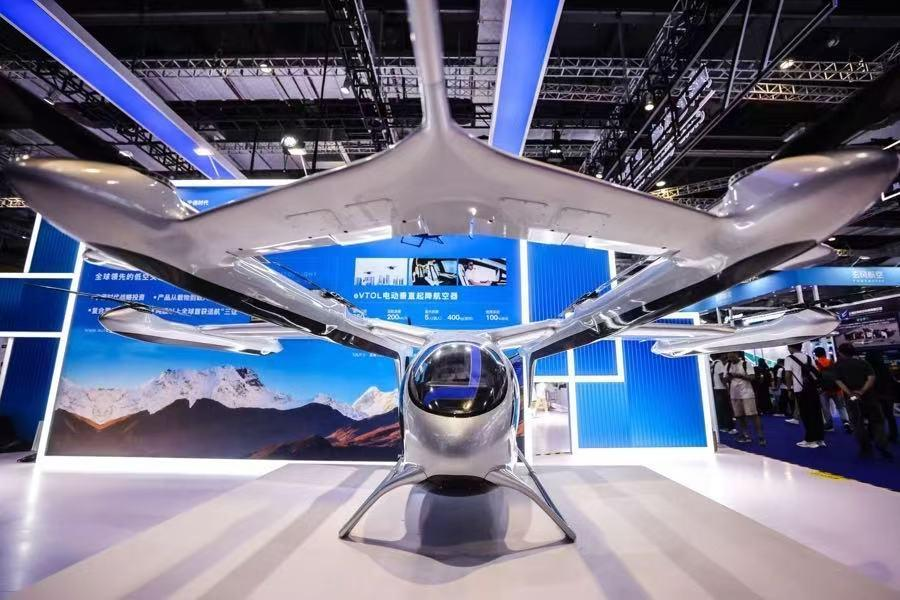
Meanwhile, the impact of the Shanghai International Low-Altitude Economy Expo continues to resonate across the sector. Emerging applications—including drones, electric vertical take-off and landing (eVTOL) aircraft, and humanoid robots—are rapidly becoming key markets for demonstrating the commercial value of solid-state batteries.
Over the past several years, competition largely centered on laboratory performance. In 2026, however, the industry’s focus is steadily shifting toward engineering capability, industrial standards, and real-world applications.
Three Key Signals This Week
Industry Standards Are Taking Shape
China has launched discussions on ten industry standards for solid-state batteries, establishing unified technical definitions, testing methods, and evaluation criteria for the sector.
Commercialization Timelines Are Becoming Clearer
Samsung SDI officially announced plans to begin mass production of all-solid-state batteries in the second half of 2027, reinforcing an increasingly convergent commercialization timeline among major global manufacturers.
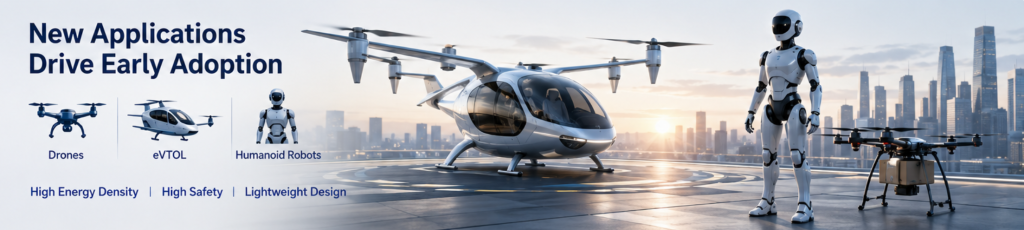
New Applications Are Driving Early Adoption
High-value markets such as low-altitude aviation and humanoid robotics are emerging as the first commercial platforms for solid-state battery deployment.
1. Standardization Accelerates Industry Development
On July 31, China’s Ministry of Industry and Information Technology (MIIT) organized a dedicated workshop through its Lithium Battery Standards Working Group to review draft proposals covering ten industry standards for solid-state lithium batteries.
The proposed framework spans key areas including solid electrolytes, cell manufacturing, performance testing, and safety evaluation, while covering the three major technology platforms: sulfide, oxide, and polymer electrolytes.
As more companies enter the solid-state battery market, industry definitions such as “semi-solid-state,” “quasi-solid-state,” and “all-solid-state” have remained inconsistent, with significant variations in testing methodologies across manufacturers.
A unified standards framework is expected to establish common testing protocols, providing a critical foundation for future product certification, large-scale manufacturing, and commercial deployment.

Baytery Insight
For emerging industries, standards are often just as important as technological breakthroughs.
Future competition will gradually shift from who launches a product first to who can manufacture products consistently under unified industry standards. Standardization is also expected to raise industry entry barriers and promote more rational market development.
2. Chinese Companies Continue Engineering Expansion
Several Chinese companies continued advancing their solid-state battery projects over the past week.
WeLion New Energy officially broke ground on its 3 GWh solid-state battery project in Qingyang, Gansu Province, targeting both electric vehicles and energy storage applications. Meanwhile, Yaoshi Lithium, incubated by WeLion, announced a new manufacturing base focused on solid-state batteries for consumer electronics, including wearable devices and portable electronics.
Compared with electric vehicles, consumer electronics generally require lower production volumes and offer higher cost tolerance, making them one of the most promising markets for early commercialization.
At the same time, Gotion High-Tech continued advancing its “Jinshi” sulfide all-solid-state battery program. The company reported an energy density exceeding 400 Wh/kg, with a 0.2 GWh pilot line already completed and a 2 GWh production line under construction. The long-term target is approximately 1 RMB/Wh.
Overall, China’s leading companies are increasingly shifting their focus from laboratory research toward pilot production, manufacturing process optimization, and engineering capability.
3. Low-Altitude Aviation Emerges as a Key Commercial Opportunity
Although the Shanghai International Low-Altitude Economy Expo has concluded, its industrial impact continues to attract attention.
Battery manufacturers showcased solid-state battery solutions designed for drones and eVTOL aircraft, emphasizing three critical advantages: enhanced safety, higher energy density, and lightweight system design.
Industry participants generally expect semi-solid-state batteries with energy densities of 300–450 Wh/kg to be adopted first in short-range passenger eVTOL aircraft, while lithium-metal all-solid-state batteries exceeding 500 Wh/kg are viewed as the long-term solution for extended-range low-altitude aviation.
Compared with passenger electric vehicles, low-altitude aircraft place greater emphasis on range, safety, and weight reduction while being less sensitive to battery costs, making them attractive early-adoption markets.
Nevertheless, challenges including cycle life, manufacturing cost, and aviation certification remain significant obstacles before large-scale commercialization can occur.
Baytery Insight
Low-altitude aviation represents more than just another application for solid-state batteries—it could become one of the industry’s most important engineering validation platforms.
Over the next several years, solid-state batteries may achieve commercial success first in drones, eVTOL aircraft, and humanoid robots before reaching mass-market passenger vehicles.
4. Overseas Manufacturers Clarify Commercialization Roadmaps
The week’s most closely watched announcement came from Samsung SDI.
During its earnings conference call, the company confirmed plans to begin mass production of sulfide all-solid-state batteries in the second half of 2027, while continuing long-term investment in next-generation battery technologies.
According to Samsung, initial commercialization will prioritize high-value applications such as robotics before expanding customer validation programs in the automotive sector.
Meanwhile, Factorial Energy and SK On announced a new collaboration aimed at validating large-scale manufacturing processes by leveraging existing lithium-ion battery production infrastructure, thereby reducing commercialization risks.
In Japan, Toyota and Nissan continued advancing their respective solid-state battery pilot programs according to previously announced development schedules.
Although manufacturers are pursuing different technology pathways, their strategic messages are becoming increasingly aligned: engineering validation will remain the industry’s primary focus over the next one to two years, with limited commercial production expected to begin around 2027.
5. Capital Markets Shift Toward Manufacturing Capability
As leading battery manufacturers move deeper into engineering validation, investor attention is also evolving.
Rather than focusing primarily on laboratory performance records, investors are increasingly evaluating manufacturing capability, supply-chain readiness, and customer qualification progress.
During the past week, companies involved in solid electrolytes, lithium sulfide, and dry-electrode manufacturing equipment continued attracting market attention, while firms demonstrating genuine engineering capability received stronger investor recognition.
This suggests that the solid-state battery industry is entering a more rational and execution-driven phase of competition.
Baytery Insight
Three major trends stood out across the global solid-state battery industry this week.
First, industry standardization is accelerating. China’s latest initiatives indicate that the sector is transitioning from concept-driven competition toward standardized industrial development.
Second, engineering capability has become the industry’s new competitive frontier. Whether through China’s expanding pilot production capacity or Samsung SDI’s commercialization roadmap, competition is increasingly centered on manufacturing capability and product consistency rather than laboratory performance alone.
Third, application scenarios continue to diversify. Beyond electric vehicles, emerging sectors such as low-altitude aviation and humanoid robotics are creating new opportunities for early commercialization and future technology validation.
Taken together, this week’s developments suggest that the global solid-state battery industry is entering a new phase.
Ultimately, the companies that shape the next generation of the industry may not be those that announce mass production first, but those capable of building stable, scalable, and cost-competitive manufacturing systems.